Introduction
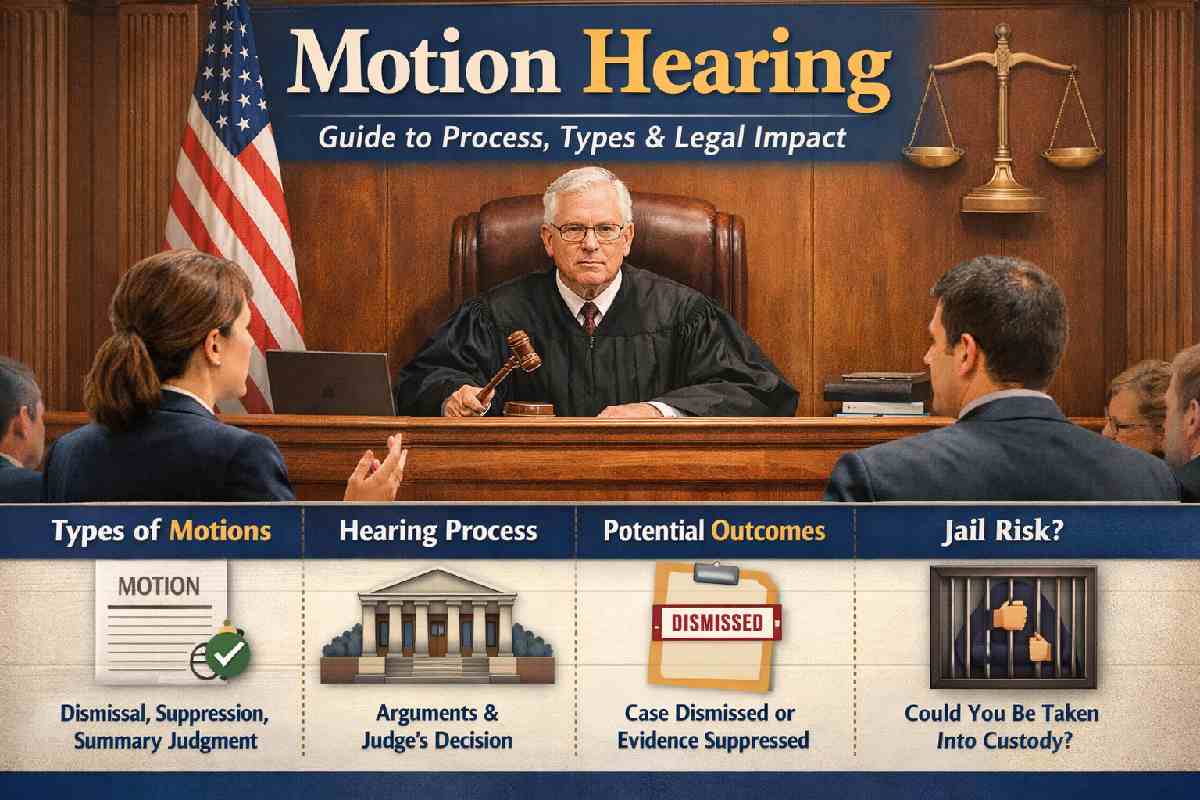
A motion hearing is an important stage in many legal cases where a judge reviews and decides on specific legal requests before the case goes to trial. These hearings help lawyers resolve legal issues early, clarify evidence rules, and sometimes even dismiss a case before a full trial begins.
Motion hearings occur in both civil and criminal courts, and they are commonly used by attorneys to request rulings on legal matters such as evidence admissibility, case dismissal, or procedural issues. The outcome of a motion hearing can significantly influence the direction of a case, making it a critical part of the legal process.
For defendants, plaintiffs, and legal professionals, understanding how motion hearings work can help them prepare better and protect their legal rights.
What Is a Motion Hearing?
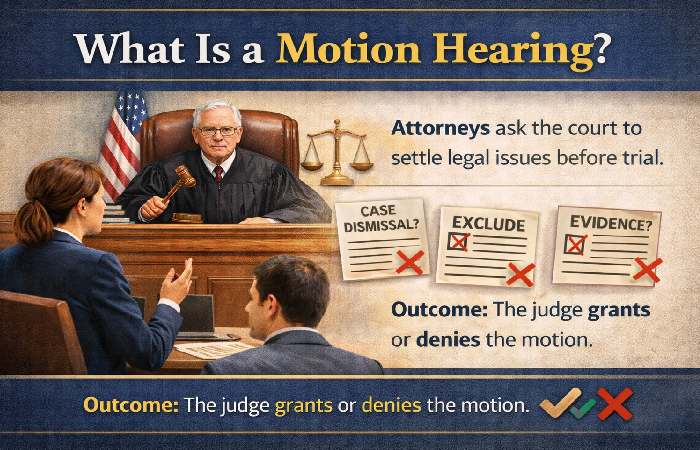
A motion hearing is a court proceeding where a judge listens to legal arguments regarding a motion filed by one of the parties in a case. A motion is a formal request asking the court to make a ruling or take a specific action.
These hearings usually take place before a trial begins, although motions can sometimes be filed during or after a trial as well.
Lawyers use motions to address issues such as:
-
Dismissing the case
-
Excluding certain evidence
-
Changing court procedures
-
Requesting additional time
-
Compelling the other party to provide documents
During the hearing, both sides present their arguments to the judge. After reviewing the arguments and evidence, the judge decides whether to grant, deny, or postpone the motion.
Motion Hearings: A Quick Start Guide
| Topic | Explanation |
| Definition | A court hearing where a judge reviews and decides a legal motion. |
| Who Files It | Attorneys representing the plaintiff or defendant. |
| Purpose | To resolve legal issues before the main trial begins. |
| Location | Conducted in court before a judge. |
| Duration | Can last from a few minutes to several hours. |
| Possible Result | Motion may be granted, denied, or scheduled for further review. |
Types of Motion Hearings
Different legal situations require different types of motions. Some of the most common types include:
| Type of Motion | Description |
| Motion to Dismiss | Requests the court to end the case due to lack of evidence or legal grounds. |
| Motion for Summary Judgment | Asks the judge to decide the case without a full trial. |
| Motion to Suppress Evidence | Requests that certain evidence be excluded because it was obtained illegally. |
| Motion for Continuance | Requests postponement of a hearing or trial date. |
| Motion to Compel | Asks the court to order the other party to produce documents or evidence. |
| Motion in Limine | Seeks to limit certain evidence before trial begins. |
These motions allow courts to address important legal questions early in the legal process.
The Process of a Motion Hearing
A motion hearing follows a structured legal process that ensures fairness and transparency.
| Step | Description |
| Filing the Motion | A lawyer submits a written motion explaining the request. |
| Notification | The opposing party is informed and given time to respond. |
| Scheduling | The court sets a date and time for the hearing. |
| Court Arguments | Lawyers present arguments supporting or opposing the motion. |
| Judge Review | The judge reviews legal arguments, documents, and evidence. |
| Final Decision | The judge grants, denies, or modifies the motion. |
The judge may issue the decision immediately or take time to review the case before announcing the ruling.
What Is a Motion Hearing in Criminal Court?
Motion hearings are particularly important in criminal cases because they help determine whether the prosecution’s evidence and procedures meet legal standards.
| Aspect | Explanation |
| Purpose | To address legal issues before a criminal trial begins. |
| Common Motions | Suppression of evidence, bail modification, or case dismissal. |
| Participants | Judge, prosecutor, defense attorney, and sometimes the defendant. |
| Evidence Considered | Police reports, witness statements, and legal documents. |
| Outcome | The judge decides whether the motion is valid or should be rejected. |
For example, a defense attorney might file a motion to suppress evidence if they believe police obtained evidence illegally. If the judge grants the motion, the prosecution may lose key evidence needed for trial.
Are Motion Hearings Worth It?
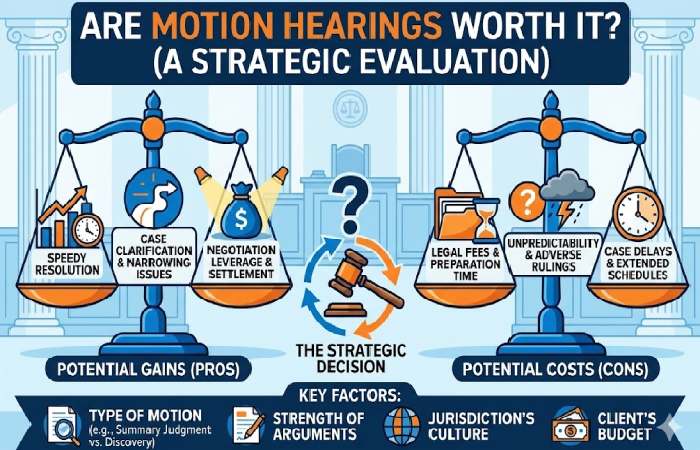
Motion hearings can play a major role in shaping the outcome of a legal case.
| Factor | Explanation |
| Legal Advantage | Allows attorneys to challenge evidence or procedures early. |
| Cost Savings | May reduce time and expense of a full trial. |
| Strategic Planning | Helps lawyers refine their legal strategy. |
| Case Dismissal | Some motions can end the case entirely. |
| Evidence Control | Important evidence may be allowed or excluded. |
For many cases, filing the right motion at the right time can significantly strengthen a party’s position.
Additional Resources
People interested in learning more about motion hearings can consult several reliable resources, including:
-
Court procedure manuals
-
Law school textbooks
-
Legal education websites
-
Government judiciary websites
-
Professional law firm blogs
These resources provide deeper explanations of court procedures and legal terminology.
Common Questions Surrounding Motion Hearings
| Question | Answer |
|---|---|
| How long does a motion hearing take? | It can take anywhere from 15 minutes to several hours. |
| Do witnesses appear at motion hearings? | Sometimes, depending on the type of motion. |
| Can new evidence be presented? | Yes, if the motion relates to evidence review. |
| Is the defendant required to attend? | In criminal cases, attendance may be recommended but not always mandatory. |
| Can multiple motions be heard together? | Yes, courts often review several motions in one session. |
Can You Go to Jail at a Motion Hearing?
| Situation | Possible Outcome |
| Bail Violation | The judge may revoke bail and order custody. |
| Contempt of Court | Ignoring court orders may result in penalties or detention. |
| Serious Criminal Motions | Custody conditions could be modified. |
| Active Arrest Warrant | The defendant may be taken into custody. |
| Routine Motion Hearing | Jail is uncommon in most standard hearings. |
Can a Case Be Dismissed at a Motion Hearing?
Yes, in some cases a motion hearing can lead to a case dismissal.
For example, a lawyer may file a motion to dismiss, arguing that the case lacks legal merit or that the evidence is insufficient to proceed. If the judge agrees, the case may be dismissed before it ever reaches trial.
Common reasons for dismissal include:
-
Lack of evidence
-
Violation of legal procedures
-
Constitutional violations
-
Improper filing of charges
However, dismissal is not guaranteed. The judge carefully reviews legal arguments before making a final decision.
Conclusion
Motion hearings play a vital role in the legal system by allowing courts to resolve important legal questions before a full trial begins. These hearings help ensure that cases follow proper legal procedures and that evidence is handled according to the law.
By addressing legal issues early, motion hearings can save time, reduce costs, and sometimes even prevent unnecessary trials. Whether in civil or criminal cases, understanding how motion hearings work can help individuals better navigate the legal process.
FAQs
1. What happens during a motion hearing?
During a motion hearing, lawyers present arguments regarding a legal motion, and the judge decides whether the request should be granted or denied.
2. Is a motion hearing the same as a trial?
No. A motion hearing focuses on specific legal issues, while a trial determines the final outcome of the case.
3. Can evidence be challenged in a motion hearing?
Yes. Motions are often used to challenge the legality or admissibility of evidence.
4. Do defendants need to attend motion hearings?
In many cases attendance is optional, but it may be recommended depending on the circumstances.
5. Can a motion hearing end a case?
Yes. If the judge grants a motion to dismiss or similar motion, the case may be terminated before trial.