
Introduction
In legal proceedings, objections in court play an important role in ensuring that trials are fair and follow proper legal rules. An objection is a formal statement made by a lawyer during a trial to challenge evidence, testimony, or a question asked by the opposing lawyer. The purpose of an objection is to prevent improper or illegal information from influencing the judge or jury.
Objections are commonly used in both civil and criminal cases. When a lawyer believes that a question, statement, or piece of evidence violates legal rules, they can raise an objection. After the objection is made, the judge decides whether to sustain (accept) or overrule (reject) the objection.
Objections in Court – Overview
| Aspect | Details |
| Meaning | A formal protest raised by a lawyer during a court trial |
| Purpose | To prevent improper questions or evidence |
| Used By | Lawyers or attorneys |
| Decided By | Judge |
| Possible Outcomes | Sustained or Overruled |
| Common Situations | Witness questioning, evidence presentation |
| Legal Importance | Ensures fairness in court proceedings |
What Are the Objections?
An objection is a statement made by a lawyer during court proceedings to challenge something they believe is improper or illegal. It may relate to the way a question is asked, the type of evidence presented, or the testimony given by a witness.
For example, if a lawyer asks a witness a question that suggests the answer, the opposing lawyer may object by saying “Objection, leading question.”
After hearing the objection, the judge evaluates whether the objection is valid. If the judge agrees, the objection is sustained, and the question or evidence is not allowed. If the judge disagrees, the objection is overruled, and the trial continues normally.
Objections help maintain courtroom discipline and ensure that the legal process remains fair and unbiased.
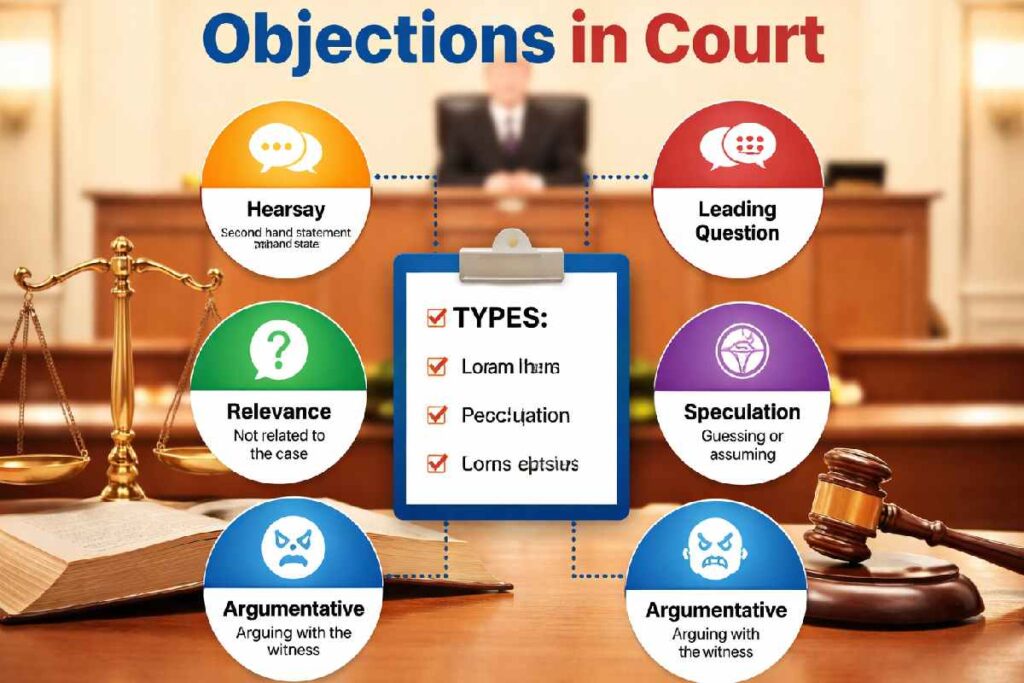
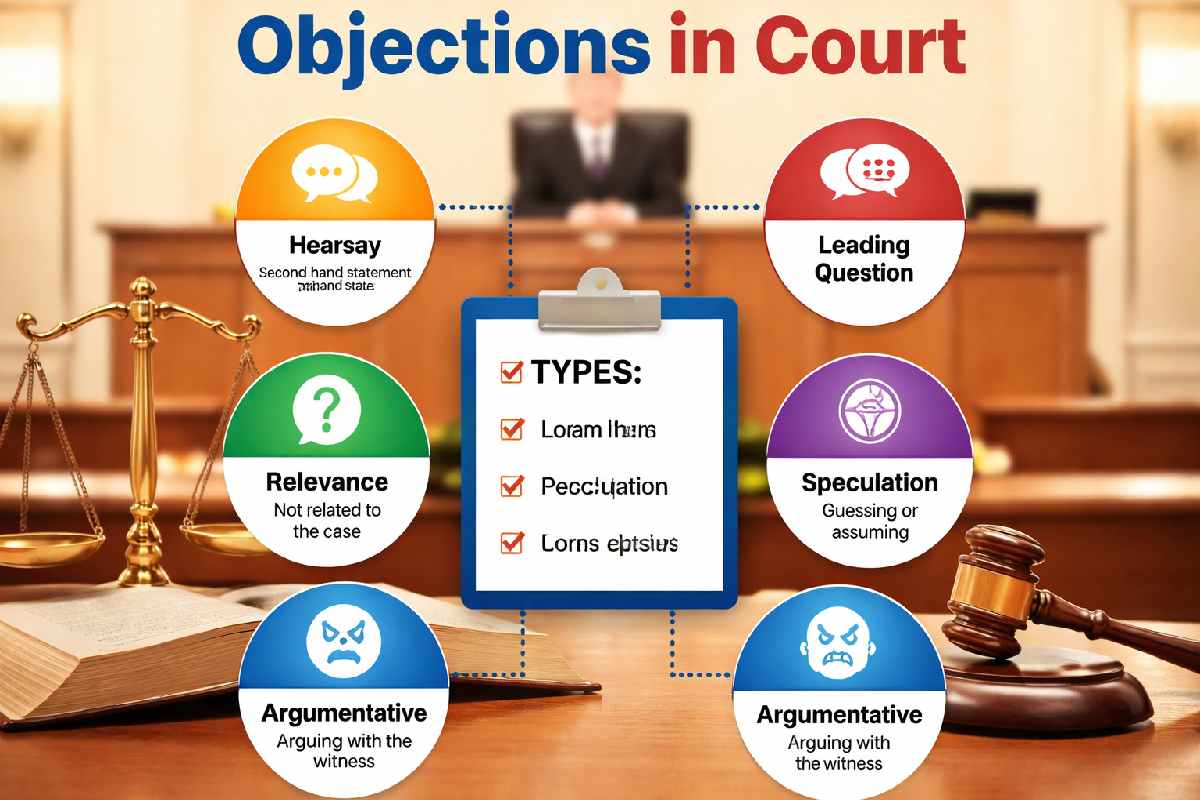
What Are the 5 Most Common Objections?
| Objection | Meaning |
| Hearsay | A witness repeats what someone else said instead of personal knowledge |
| Leading Question | A question that suggests the answer to the witness |
| Relevance | Evidence or questions not related to the case |
| Speculation | Asking a witness to guess rather than state facts |
| Argumentative | When a lawyer argues with the witness instead of asking questions |
These objections are commonly raised during witness examinations and cross-examinations.
List of Objections in Court
| Objection Type | Description |
| Hearsay | Statement based on another person’s words rather than direct knowledge |
| Leading Question | Question suggesting the answer |
| Relevance | Evidence not related to the case |
| Speculation | Witness asked to guess or assume |
| Argumentative | Lawyer arguing with witness |
| Lack of Foundation | Evidence introduced without proper background |
| Asked and Answered | Question already answered earlier |
| Compound Question | Question containing multiple parts |
| Opinion | Witness giving an opinion instead of facts |
| Assumes Facts Not in Evidence | Question assumes something not proven |
How to Respond to Objections in Court
When an objection is raised in court, the judge will listen to both sides before making a decision. Lawyers must respond clearly and professionally.
Common ways to respond include:
- Explain the Question
The lawyer may explain why the question is relevant or legally acceptable. - Rephrase the Question
If the objection is valid, the lawyer may change the wording of the question. - Provide Legal Justification
Lawyers may refer to legal rules or case law to support their argument. - Accept the Judge’s Decision
Once the judge decides to sustain or overrule the objection, the trial proceeds accordingly.
Proper responses help maintain courtroom professionalism and keep the trial process organized.
Types of Objections in Sales
| Objection Type | Description |
| Price Objection | Customer thinks the product is too expensive |
| Need Objection | Customer believes they do not need the product |
| Authority Objection | Customer says they are not the decision maker |
| Trust Objection | Customer doubts the company or product |
| Time Objection | Customer says they are not ready to buy now |
Although these objections occur in business and sales rather than courtrooms, they also involve addressing concerns and providing clear explanations.
What Are the Four Types of Objections – Examples
| Type of Objection | Example |
| Logical Objection | “The product price is higher than competitors.” |
| Emotional Objection | “I feel unsure about buying this product.” |
| Practical Objection | “I don’t have the budget right now.” |
| Authority Objection | “I need my manager’s approval before deciding.” |
These types are mostly used in business communication and negotiation.
Conclusion
Objections in court are an essential part of the legal process. They allow lawyers to challenge improper questions, protect their clients’ rights, and ensure that trials follow the rules of evidence. When used correctly, objections help maintain fairness and accuracy during legal proceedings.
Understanding the different types of objections—such as hearsay, leading questions, and relevance—helps lawyers manage courtroom situations effectively. Judges play a crucial role in deciding whether objections are valid and ensuring that the trial remains fair.
FAQs
1. What is an objection in court?
An objection is a formal protest made by a lawyer to challenge a question, testimony, or evidence during a trial.
2. Who decides whether an objection is valid?
The judge decides whether to sustain or overrule an objection.
3. What happens when an objection is sustained?
When an objection is sustained, the question or evidence is not allowed in court.
4. What happens when an objection is overruled?
When an objection is overruled, the trial continues and the evidence or question is allowed.
5. What is the most common objection in court?
One of the most common objections is hearsay, where a witness repeats what another person said instead of giving direct knowledge.