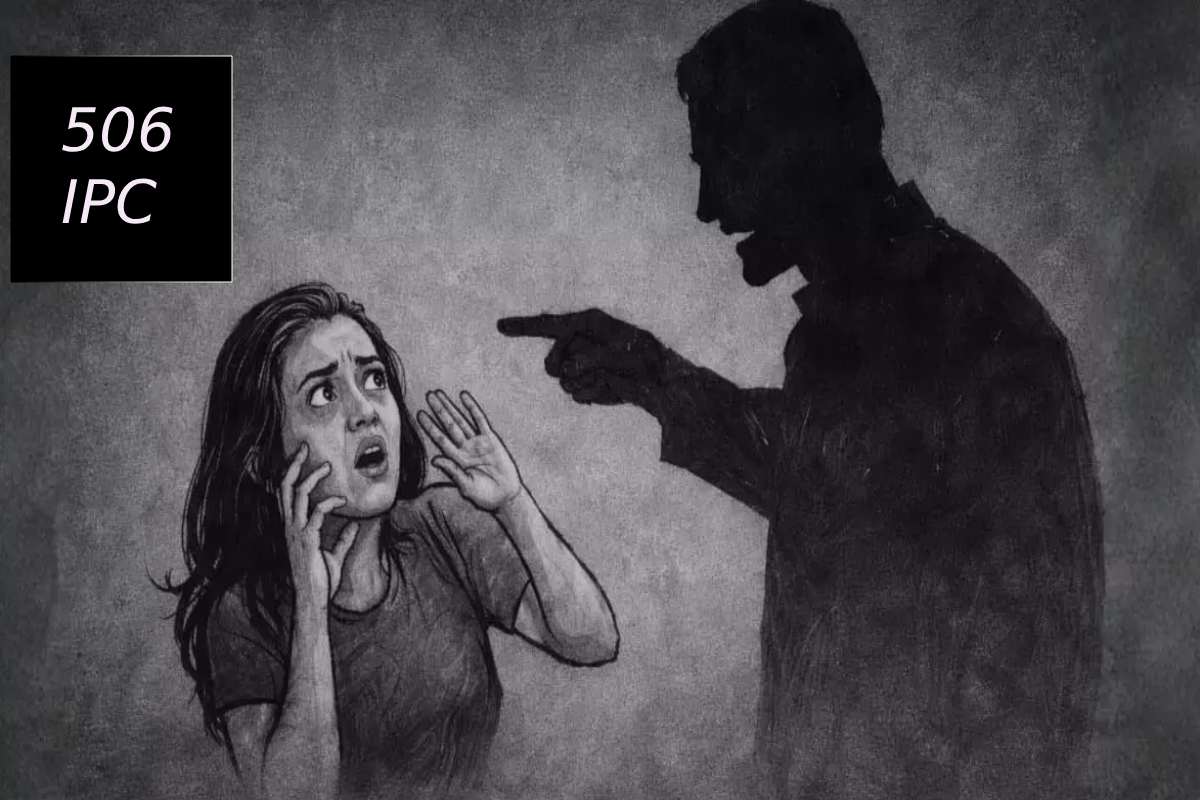
506 IPC Understanding Section: The Essentials According to the IPC, section 506 involves the crime of intimidation. This provision criminalizes the act of putting someone in fear of being harmed to scare or bother them or to coerce them unlawfully.
Legal Overview
Section 506 IPC provides punishment for criminal intimidation, which is defined under Section 503 IPC. It applies when a person threatens another with injury to body, reputation, or property to cause fear or compel action.
Punishment Structure
| Type | Description | Punishment | Court |
| Part 1 | Simple Threat | Up to 2 years imprisonment, fine, or both | Judicial Magistrate First Class |
| Part 2 | Threat to cause death, grievous hurt, destruction of property, etc. | Up to 7 years imprisonment, fine, or both | Judicial Magistrate First Class |
What Are the Punishments Under This Section?

- Section 506 stipulates the following punishments for the offense
- Criminal intimidation without actual harm to the person – imprisonment for two years or, exemplary, or both
- Criminal intimidation referring to death or grievous hurt – UP to seven years imprisonment and fine.
The court also determines the extent of the penalty right from the conduct of the trial based on the facts of the case and the state of affairs in that case.
Hitting section 506, IPC differs from all other offenses in that it does not need intent of commission of the offense referred to in the threat.
Specialist Handling Section 506 IPC Cases
| Specialist Type | Role | Experience Level | Typical Case Stage |
| Criminal Defense Lawyer | Represents accused | 3–25+ years | FIR to Trial |
| Public Prosecutor | Represents State | Government-appointed | Trial stage |
| Senior Advocate | Handles complex/intimidation with multiple charges | 15+ years | Appeals / Sessions Court |
| Legal Consultant | Pre-litigation advice | 5+ years | Complaint drafting |
Average Legal Fees
| Case Type | Lower Court Fee (INR) | Sessions/Appeal Fee (INR) | Total Estimated Range |
| Simple Threat (Part 1) | ₹15,000 – ₹35,000 | ₹25,000 – ₹60,000 | ₹25,000 – ₹80,000 |
| Serious Threat (Part 2) | ₹40,000 – ₹1,00,000 | ₹75,000 – ₹2,50,000 | ₹75,000 – ₹3,00,000 |
Which Court Handles Section 506 IPC Cases?
| Category | Details |
|---|---|
| Law Section | Section 506 of the Indian Penal Code (IPC) |
| Offence Type | Criminal Intimidation |
| Nature of Offence | Cognizable / Non-cognizable (depends on gravity & state amendments) |
| Bailable or Not | Usually Bailable (Simple intimidation) / May be Non-bailable (Aggravated threat) |
| Compoundable | Yes (With permission of court in some cases) |
| Punishment (Part 1) | Up to 2 years imprisonment, or fine, or both |
| Punishment (Part 2 – Threat to cause death, grievous hurt, etc.) | Up to 7 years imprisonment, or fine, or both |
| Court for Trial (Part 1) | Judicial Magistrate First Class (JMFC) |
| Court for Trial (Part 2 – Serious Threat) | Judicial Magistrate First Class (JMFC) |
| Appellate Court | Sessions Court |
Location-Based Cost Comparison
| Location | Avg Part 1 Cost | Avg Part 2 Cost | Notes |
| Delhi | ₹ 40,000 | ₹ 1,20,000 | Higher senior advocate fees |
| Mumbai | ₹ 45,000 | ₹ 1,50,000 | Expensive litigation ecosystem |
| Hyderabad | ₹ 30,000 | ₹ 90,000 | Moderate court fees |
| Lucknow | ₹ 25,000 | ₹ 75,000 | Lower comparative cost |
| Chennai | ₹ 35,000 | ₹ 1,00,000 | High documentation standards |
Section 506 IPC is Bailable or Not?
Understanding Bail Options
This section is bailable in some states and non-bailable in some other states, based on the type of threat. For example in State of Uttar Pradesh this section is non-bailable.
- Simple Threats: These are bailable. The accused can get bail from the police station or court.
- Serious Threats: The person needs to go to court to request bail. The court may accept or reject the bail based on the facts of the case.
Always consult a lawyer to understand bail options in any specific case.
Conclusion
Another Indian criminal offense is criminal intimidation, which falls under section 506 of IPC, in which an individual puts the life and or property of one or more persons in danger. The parts of this offense are threats of violence and the manufacture.
There are two types of intimidation However, with and without physical contact, with particular emphasis on more severity of death or serious bodily harm threats. Punishments can range from two years for intimidation without harm to seven years for severe threats. Importantly, intent to commit the threatened act is not necessary for prosecution. The section accommodates verbal threats made in various forms and allows for the possibility of anticipatory bail.